
FISMA vs FedRAMP: Understanding the Difference and Why Both Matter to Your Agency
FISMA and FedRAMP are frequently confused, often conflated, and critically important to get right. This guide breaks down what each framework requires, who it applies to, how they interact, and what agencies and cloud service providers need to do to stay compliant and operationally secure.
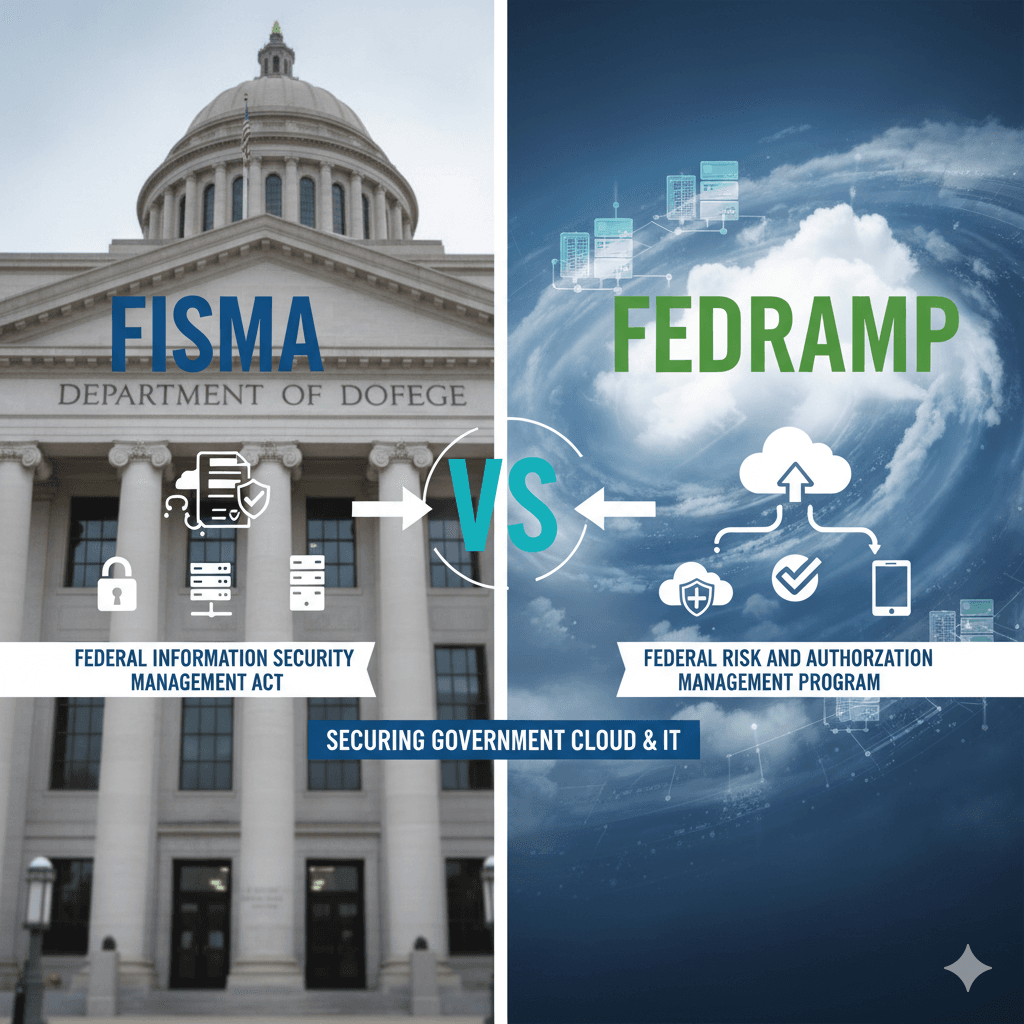
Key takeaways
- How FISMA and FedRAMP differ in scope and purpose
- Where the frameworks overlap in day-to-day governance
- Practical ways to integrate FedRAMP into agency evidence
FISMA sets expectations for federal information security programs, while FedRAMP focuses specifically on cloud service authorization. If you treat one as a substitute for the other, you’ll create compliance gaps that show up during reviews.
Think of it as an operating model: FISMA drives how an agency manages risk and security outcomes; FedRAMP provides a standardized path for authorizing cloud systems used within that agency’s risk framework.
Operationally, the best approach is to integrate FedRAMP decisions into your internal control evidence and governance processes. That way, you reduce the time between authorization decisions and actual security readiness across the enterprise.